

 العربية
  Deutsch
  Español
  Français
  हिन्दी
  Italiano
  日本語
日本語  Melayu
  Polski
  Português
  Română
  Русский
  اُردو
اُردو  中文
中文 
Deep Clean Services Near Me: What to Expect Before You Book
Introduction
Your home can look tidy on the surface while grease, limescale, dust and residue build in places a weekly clean rarely reaches. Leave it too long and bathrooms feel dull, kitchens become harder to degrease, and moving-day cleaning turns stressful. The right deep clean services near me search should help you find a cleaner who understands detail work, safe product use and realistic timing, not just someone who promises to “do everything” in two hours.
This guide explains what a proper deep clean includes, when to book one, what to ask before hiring, and how to prepare.
Answers First
Deep clean services near me are best for homes that need more than routine dusting, vacuuming and surface wiping. A deep clean usually targets kitchens, bathrooms, skirting boards, switches, doors, appliance exteriors, reachable high-touch areas, floors and built-up grime, with extras agreed before booking.
For the best result, compare local cleaners, agree a room-by-room checklist, share photos of problem areas and confirm whether oven cleaning, carpets, inside windows or inside cupboards are included.
What Is Included in a Deep Clean?
A deep clean is a more detailed reset of the property. It is not the same as decluttering, hoarding support, specialist mould remediation or professional carpet extraction, although some cleaners may offer related add-ons.
Typical deep cleaning tasks include:
- Degreasing kitchen surfaces, splashbacks, hob areas and appliance fronts.
- Cleaning sinks, taps, baths, showers, toilets, mirrors and bathroom fittings.
- Reducing limescale and soap scum where products are suitable for the surface.
- Wiping skirting boards, door frames, handles, light switches and reachable ledges.
- Vacuuming edges, under accessible furniture and along dust traps.
- Mopping hard floors with the correct product for the floor type.
For a room-specific service, readers can compare local deep cleaning services and discuss priorities before booking.
Professional tip: ask for the checklist in writing. “Deep clean” means different things to different people, so clarity prevents disappointment on the day.
[Add real cleaner quote, field note, before-and-after example, or technician tip here]
When Should You Book a Deep Clean?
Book a deep clean when routine cleaning no longer keeps the home at the standard you want. Common triggers include spring cleaning, guests arriving, recovery after illness, preparing to sell, moving into a new home or dealing with months of build-up.
Tenants often need a deeper clean before checkout, especially around kitchens, bathrooms, appliances and cupboards. If you are moving, a dedicated move in and move out cleaning service may be more suitable than a general one-off clean.
Landlords and property managers should book early enough to allow inspection time before new occupants arrive. Leaving cleaning until handover morning limits what can be safely achieved.
How to Choose Deep Clean Services Near You
The best cleaner is not always the cheapest or the one with the fastest slot. Look for someone who asks sensible questions about size, condition, surfaces and access before quoting.
Questions to ask before booking
- Do you bring your own products and equipment?
- What is included as standard, and what counts as an extra?
- Can you work around pets, children, allergies or fragrance sensitivities?
- Do you have public liability insurance, and can I see proof if needed?
- How many hours or cleaners are realistic for this property?
Scrub Bunnies helps customers compare local cleaners directly. If the job is routine upkeep rather than a full reset, a domestic cleaning service may be a better fit.
How to Prepare Before the Cleaner Arrives
A cleaner can work faster and achieve a better finish when the basics are ready. This does not mean cleaning before the cleaner arrives; it means removing obstacles that waste paid time.
- Clear floors, worktops and bathroom ledges as much as possible.
- Put away valuables, paperwork, medicines and personal items.
- Leave access instructions, parking details and key arrangements in writing.
- Send photos of heavy grease, limescale, stains or pet hair before the quote is agreed.
- Confirm whether the cleaner should prioritise kitchens, bathrooms, floors or handover areas.
- Tell the cleaner about delicate finishes, unsealed stone, untreated wood or specialist coatings.
For urgent situations, such as guests arriving or a last-minute inspection, same-day cleaning may help, but be realistic: a true deep clean still needs enough time.
Safety, Surfaces and Product Checks
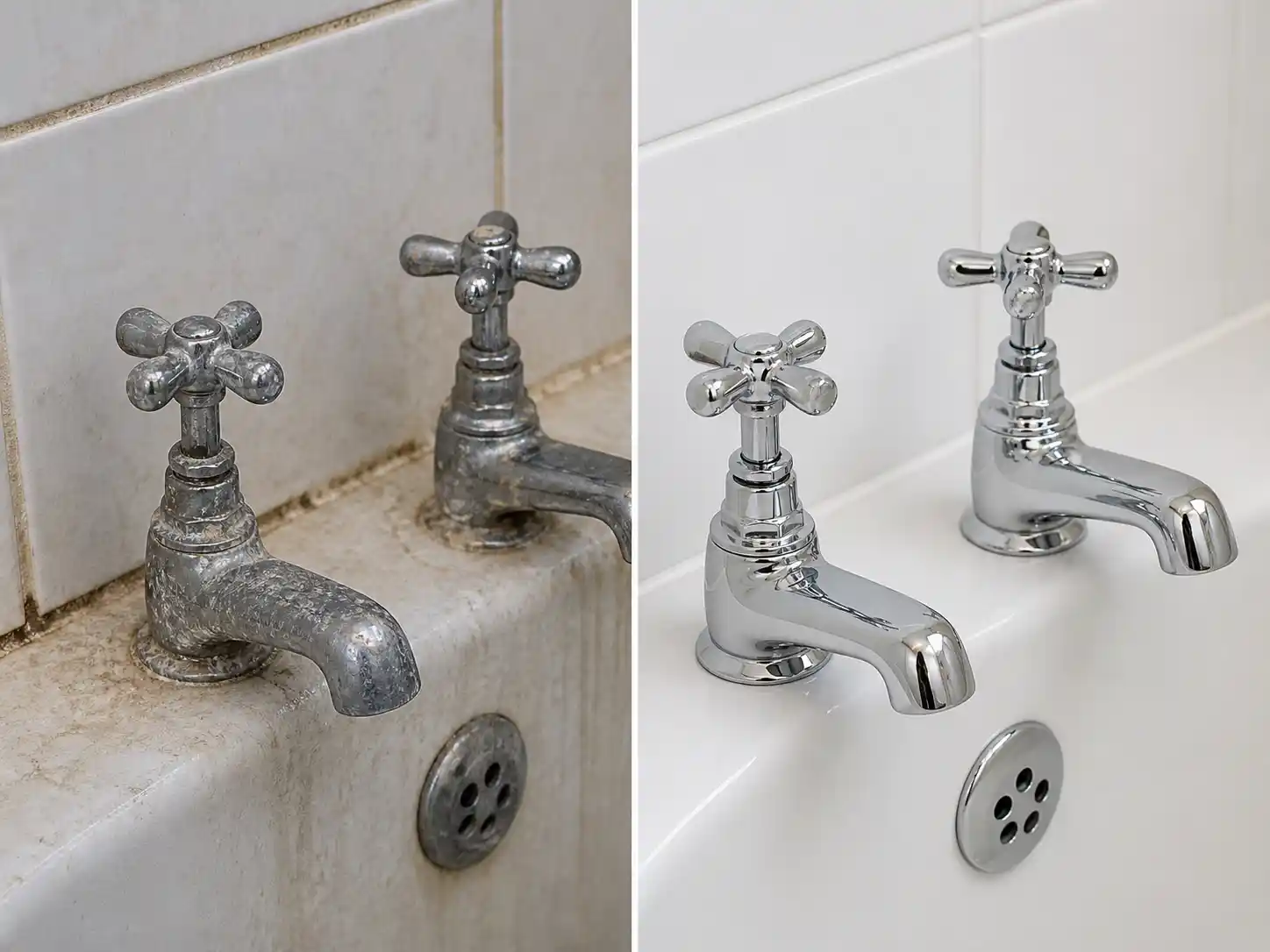 Cleaning safely matters as much as cleaning thoroughly. Stronger products are not always better, especially on natural stone, brass, plated taps, oiled wood, delicate fabrics, matt paint, rubber seals and specialist flooring.
Never mix cleaning chemicals. Bleach, descalers, ammonia-based products, drain cleaners and acidic cleaners can produce harmful fumes when combined incorrectly. A professional cleaner should follow labels, use ventilation, wear suitable gloves where needed and respect product dwell time before rinsing or wiping.
Patch testing is sensible on surfaces that may mark, fade or etch. Abrasive pads can remove grime quickly, but they can also scratch glass, stainless steel, acrylic baths, high-gloss doors and coated hobs.
High-touch points such as handles, switches, taps and bannisters deserve attention, but cleaning and disinfection are not the same thing. If disinfection is requested, the correct product, dilution and contact time must be followed.
How Long It Takes and What Affects Cost
The time needed depends on property size, number of bathrooms, kitchen condition, clutter, pet hair, access, add-ons and whether one cleaner or a team attends. A small flat in good condition may take a few hours; a family home with heavy grease and limescale may take most of a day or longer.
Cost is usually affected by:
- Number of rooms, bathrooms and floors.
- Level of build-up and whether the home is empty or furnished.
- Extras such as oven interiors, fridge interiors, carpets, upholstery or inside cupboards.
- Whether the clean is standard, urgent, end of tenancy or post-work.
If a property is being handed back to a landlord or agent, an end of tenancy cleaning service can help focus the clean around checkout expectations. It should not be sold as a guaranteed deposit return, because deposit decisions depend on evidence, the inventory and the property’s starting condition.
Common Mistakes to Avoid
- Booking too little time: a neglected kitchen and two bathrooms can easily absorb several hours.
- Assuming all extras are included: oven interiors, carpet cleaning and inside cupboards often need separate agreement.
- Using harsh products on delicate surfaces: marble, limestone, brass, wood and coated finishes need extra care.
- Leaving clutter in place: cleaners can clean surfaces more effectively when they are accessible.
- Not documenting move-out cleans: tenants and landlords should keep checklists, receipts and dated photos.
Conclusion
Searching for deep clean services near me should lead to a practical, well-scoped clean that tackles built-up grime safely and realistically. The strongest results come from clear communication: share the property condition, agree the checklist, confirm products and extras, and give the cleaner enough time to do the job properly.
Your next step is simple: compare local cleaners, ask the right questions, and book the service that matches the condition of the property rather than the shortest available slot.
Q&A
Is a deep clean the same as a regular clean?
No. A regular clean maintains the home, while a deep clean tackles built-up dirt, edges, fittings, high-touch points and areas often missed during routine cleaning.
Do deep clean services include oven cleaning?
Not always. Many cleaners treat oven interiors as an add-on because they take extra time and may need specific products. Confirm this before booking.
Should I provide cleaning products?
Some cleaners bring their own products and equipment, while others use what is already in the home. Agree this in advance and mention allergies, pets or delicate surfaces.
Can a deep clean remove mould?
A cleaner may remove light surface mould from suitable areas, but recurring mould, damp, contaminated materials or large patches need the cause investigated and may require specialist help.
How often should I book a deep clean?
Many homes benefit from a deep clean every few months or seasonally, but frequency depends on pets, children, cooking habits, allergies, occupancy and routine cleaning.
Can I book a deep clean before moving out?
Yes. For rental handovers, agree a checklist based on the inventory and checkout expectations. Keep photos and receipts, but avoid any service that promises a guaranteed deposit return.
Further Reading
These Scrub Bunnies pages support the topic and provide useful next steps for readers.
- Professional Deep Cleaning Services
- Domestic Cleaning Services Near You
- Move In and Move Out Cleaning Services
- End of Tenancy Cleaning
- Same-Day Cleaning Services
External Sources to Cite
- Health and Safety Executive: COSHH and cleaners
- GOV.UK: Sodium hypochlorite general information
- Shelter England: Cleaning, gardening and deposit deductions
Whole-Home Deep Cleaning Customer Guide
A practical Scrub Bunnies customer guide to help you understand what a whole-home deep clean includes, how to prepare before your cleaner arrives, what to ask before booking, and how to avoid common cleaning mistakes around surfaces, products, timing, and expectations.
Share Post
0 Comments