

 العربية
  Deutsch
  Español
  Français
  हिन्दी
  Italiano
  日本語
日本語  Melayu
  Polski
  Português
  Română
  Русский
  اُردو
اُردو  中文
中文 
Tips for Hiring a Domestic Cleaner You Can Trust
Hiring help at home should make life easier, not create new worries. The problem is that many people book the first available cleaner without checking what is included, how access works, or whether the products are right for their surfaces. That can lead to missed expectations, wasted money, or damage to delicate finishes. These practical tips for hiring a domestic cleaner will help you choose confidently, agree clear standards, and get better value from every visit.
Answers first
The best way to hire a domestic cleaner is to define the job clearly, check reviews and trust signals, confirm insurance and access arrangements, then agree a written task list before the first clean. Do not choose on price alone; choose the cleaner who understands your home, your surfaces, your priorities and your schedule.
For regular support, start with a longer first visit or one-off deep clean, then move to weekly or fortnightly maintenance once the home is at a manageable baseline.
Find Domestic cleaning near you
Decide what you actually need before comparing cleaners
One of the most useful tips for hiring a domestic cleaner is to separate routine cleaning from catch-up cleaning. A two-hour maintenance visit is not the same as tackling months of limescale, grease, dust behind furniture and neglected skirting boards.
Domestic cleaning usually covers routine tasks such as dusting, vacuuming, mopping, bathroom cleaning, kitchen wipe-downs and general tidying. For an overview of this type of service, see Domestic Cleaning Services Near You.
Choose the right type of clean
- Regular domestic cleaning: best for weekly or fortnightly upkeep.
- General cleaning: useful for standard household jobs and flexible room-by-room cleaning. See General Cleaning Services.
- Deep cleaning: better for built-up grime, limescale, grease, skirting boards, appliance exteriors and neglected areas. See Professional Deep Cleaning Services.
- Scheduled cleaning: ideal if you want consistent weekly, fortnightly or monthly visits. See Schedule Regular House Cleaning.
Professional nuance: a good cleaner may recommend a longer first clean before agreeing a shorter regular slot. That is not automatically upselling; it is often the only realistic way to reset the property before maintenance cleaning begins.
Tips for hiring a domestic cleaner: what to check first
Trust matters because you are inviting someone into your private space. Before booking, look beyond star ratings and check how the cleaner or platform handles communication, complaints, insurance, access and expectations.
Check reviews properly
Do not only count five-star reviews. Read what people praise. Look for comments about punctuality, care with belongings, consistency, communication and attention to detail. A cleaner who responds professionally to occasional criticism may be more reliable than one with vague praise only.
Ask about insurance
Ask whether the cleaner has current public liability insurance and what it covers. Scrub Bunnies explains how visible insurance status is handled on its Insurance Verification page. Remember that any badge or document check is a trust signal, not a substitute for your own sensible questions.
Consider ID and background checks
Where background or identity checks are available, ask how current they are and who reviewed them. The ID & Background Check Verification page explains how Scrub Bunnies displays verification information when cleaners provide supporting documentation.
Clarify employment status and payment
Confirm whether you are booking an independent cleaner, a cleaning company, or a platform connection. Ask for clear payment terms, cancellation notice and an invoice or receipt. Be cautious if payment details change unexpectedly or if a cleaner refuses to explain who you are paying.
Questions to ask before hiring a domestic cleaner
A short conversation before the first visit prevents most misunderstandings. Use these questions to compare cleaners fairly:
- What is included in a standard domestic clean?
- What tasks cost extra, such as ovens, inside windows, laundry, ironing or inside appliances?
- Do you bring your own products, cloths, mop and vacuum?
- Do you use separate cloths for toilets, bathrooms, kitchens and food-contact areas?
- Can you work around pets, children, allergies or fragrance sensitivities?
- What happens if something is damaged or a task is missed?
- Will the same cleaner attend each time?
- How do you handle keys, alarm codes and access instructions?
Key takeaway: the best cleaner is not always the cheapest. It is the person who can clearly explain scope, safety, materials, timing and communication.
How to prepare for the first visit
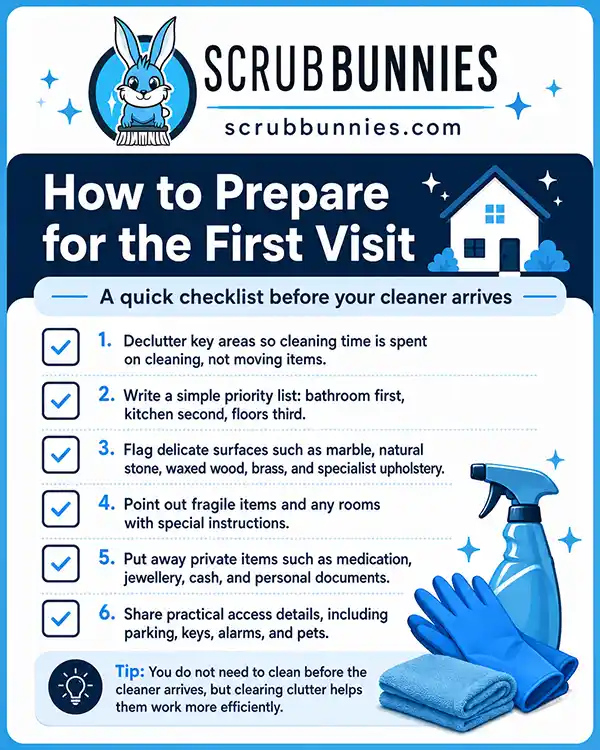
You should not need to clean before the cleaner arrives. However, you should remove clutter so the paid time is spent cleaning rather than moving toys, paperwork, dishes and clothes.
Create a simple priority list
List the rooms in order of importance. For example: bathroom first, kitchen second, floors third, bedrooms only if time allows. This helps the cleaner make sensible decisions if the agreed time runs short.
Flag delicate surfaces
Tell the cleaner about natural stone, marble, limestone, waxed wood, unlacquered brass, specialist upholstery, induction hobs, painted cabinets and fragile items. These surfaces can be damaged by the wrong pH, too much abrasion, excess moisture or unsuitable descalers.
Secure private items
Put away medication, jewellery, cash, personal documents and anything sentimental. This protects both you and the cleaner from awkward situations.
[Add real cleaner quote, field note, or technician tip here]
Cleaning safety and surface care matter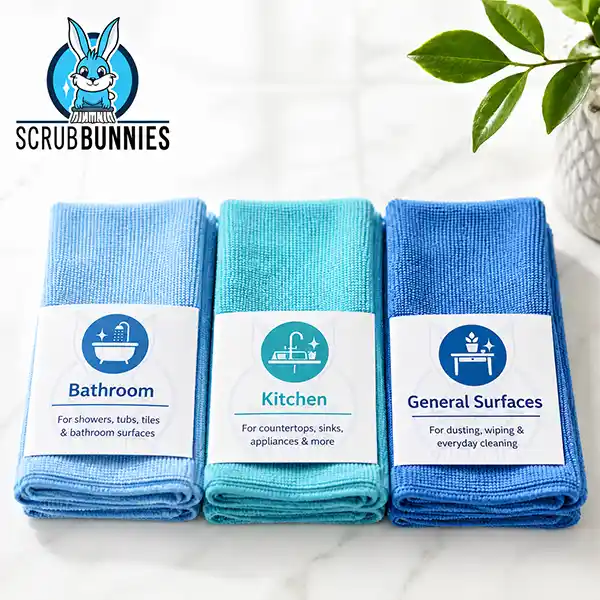
Safe cleaning is not just about making a room smell fresh. It means using the right product, at the right dilution, on the right surface, with enough contact time where disinfecting is needed.
Never ask a cleaner to mix chemicals. Bleach should not be mixed with ammonia, vinegar, descalers or other cleaning products. Strong products should be used with ventilation, gloves where needed and full label-following.
For everyday domestic cleaning, pH-neutral products are often safer for delicate sealed floors, stone and some worktops. Abrasive pads may be fine on some robust surfaces but risky on glossy units, soft metals, acrylic baths and coated shower screens.
Good cleaners also manage cross-contamination. Toilet cloths should not migrate to kitchen worktops. Mops should be clean, not just wet. Vacuums should be maintained, with filters emptied or changed as needed.
Common mistakes when hiring a domestic cleaner
- Booking too little time: a cleaner cannot deep clean a busy family home in the same slot as a light maintenance visit.
- Being vague: “just clean everywhere” is less useful than a clear room-by-room priority list.
- Ignoring access arrangements: parking, keys, alarms and pets should be agreed before arrival.
- Comparing only hourly rates: speed, quality, insurance, reliability and equipment all affect value.
- Expecting specialist work in a standard clean: carpet cleaning, upholstery cleaning, oven cleaning and heavy mould removal may need separate services.
Conclusion
The smartest tips for hiring a domestic cleaner are simple: define the job, check trust signals, ask practical questions, protect delicate surfaces and start with realistic expectations. A good cleaner can save time, reduce household stress and keep your home more comfortable, but only when the scope is clear from the beginning.
Choose a cleaner who communicates well, respects your home and understands safe, surface-appropriate cleaning. That combination is worth far more than the lowest quote.
Find Domestic cleaning near you
Q&A
How do I choose a trustworthy domestic cleaner?
Check reviews, ask about insurance, confirm ID or background-check information where available, agree payment terms, and start with a clear written task list. A trustworthy cleaner should communicate clearly before the first visit.
Should I clean before my cleaner comes?
No, but you should tidy clutter, clear worktops where possible and put away personal items. This lets the cleaner spend paid time on actual cleaning rather than sorting possessions.
Is weekly or fortnightly cleaning better?
Weekly cleaning suits busy homes, families, pets and higher foot traffic. Fortnightly cleaning can work well for smaller households that keep on top of daily tidying between visits.
What should be included in a domestic clean?
A standard domestic clean usually includes dusting, vacuuming, mopping, bathroom cleaning, kitchen surface cleaning, wiping accessible surfaces and light tidying. Always confirm the exact checklist before booking.
Do domestic cleaners bring their own products?
Some do and some do not. Confirm this before the visit, especially if you have allergies, pets, fragrance preferences, delicate surfaces or specific products you do not want used in your home.
When should I book a deep clean instead?
Book a deep clean if there is heavy limescale, grease, dust build-up, neglected edges, post-illness cleaning, moving-related cleaning or a long gap since the last thorough clean.
Further Reading
Ready to find a cleaner who fits your home?
Use Find Cleaners Near You to search by postcode, compare relevant cleaning services and start a clear conversation before you book.
10 Checks Before Hiring a Domestic Cleaner
Checklist of 10 checks before hiring a domestic cleaner, covering insurance, reviews, task list, access, products, surface care and payment terms.
Share Post
0 Comments