

 العربية
  Deutsch
  Español
  Français
  हिन्दी
  Italiano
  日本語
日本語  Melayu
  Polski
  Português
  Română
  Русский
  اُردو
اُردو  中文
中文 
How to Find a Good Cleaner You Can Trust
Finding a cleaner should make life easier, not add another worry to your list. The problem is that a poor fit can mean missed tasks, unclear pricing, surface damage, awkward communication or a cleaner who simply does not turn up. This guide explains how to find a good cleaner with confidence, from checking reviews and agreeing a clear checklist to asking the safety questions that protect your home.
Answers First
The best way to find a good cleaner is to define the job clearly, compare recent reviews, ask practical questions about insurance, products, access and availability, then start with a realistic trial clean. A good cleaner is not just the cheapest option; they are reliable, careful with surfaces, clear about what is included and easy to communicate with.
Define What You Need Before You Search
Before comparing cleaners, decide whether you need routine upkeep, a one-off reset or specialist work. This matters because a two-hour weekly clean is very different from a deep clean after months of build-up.
Common cleaning needs
- Regular domestic cleaning: dusting, vacuuming, mopping, bathrooms, kitchens and general tidying.
- General cleaning: flexible household cleaning for everyday maintenance, often weekly or fortnightly.
- Deep cleaning: more detailed work on grime, limescale, edges, build-up and neglected areas.
- Move-related cleaning: more intensive cleaning before or after a tenancy, sale or move.
If you want routine help, Scrub Bunnies has a useful overview of domestic cleaning services and what they usually include. For broader household upkeep, the general cleaning services page is also relevant.
Be honest about the starting condition of your home. If there is heavy grease, pet hair, hard-water marks, mould-prone grout or cluttered surfaces, book more time or start with a deep clean before moving to regular maintenance.
How to Find a Good Cleaner and Compare Options
Search results often focus on postcode tools, reviews and quotes. Those are useful, but they are only the beginning. A cleaner may have good ratings and still be wrong for your home if their availability, methods or expectations do not match yours.
Look for trust signals
- Recent, specific reviews rather than vague praise.
- Clear service descriptions and realistic task lists.
- Evidence of insurance where appropriate.
- Good communication before booking.
- Willingness to discuss products, surfaces, pets and access.
On Scrub Bunnies, customers can search for cleaners near you by postcode and service type. You can also review how Scrub Bunnies customer reviews work before relying on feedback as part of your decision.
Independent cleaner or cleaning company?
Neither is automatically better. An independent cleaner may offer continuity, flexibility and direct communication. A cleaning company may offer more structured cover, admin and support if someone is ill or away.
The practical question is this: who will actually clean your home, what exactly will they do, and what happens if something goes wrong?
Questions to Ask Before Booking a Cleaner
Good cleaners usually welcome clear questions because they prevent misunderstandings. Ask before you book, not after the first disappointing visit.
- What is included in a standard clean?
- What tasks cost extra or need more time?
- Do you bring products and equipment, or should I provide them?
- Do you have experience with pets, children, allergies or delicate surfaces?
- How do you handle keys, alarms, parking and access?
- Can I see recent reviews or profile feedback?
- Do you have public liability insurance or other relevant cover?
- What is your cancellation policy?
- Will it usually be the same cleaner each visit?
If insurance is shown on a profile, understand what it means and what it does not guarantee. Scrub Bunnies explains this on its Insurance Verification page.
How to Set Up the First Clean
The first visit should be treated as a working trial. That does not mean watching every move; it means setting the cleaner up to succeed.
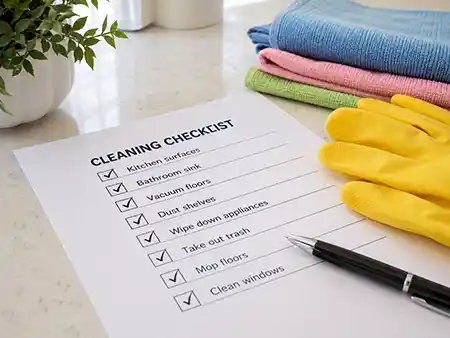
Create a simple priority checklist
List your must-do tasks first, then nice-to-have tasks if time allows. For example:
- Kitchen worktops, hob, sink and appliance fronts.
- Main bathroom, toilet, taps, shower screen and mirror.
- Vacuum high-traffic areas, rugs and stairs.
- Mop suitable hard floors after loose grit is removed.
- Dust reachable surfaces and wipe touchpoints.
Do not overload a short booking. A cleaner cannot properly deep clean a large family home in two hours. If the home is behind, consider professional deep cleaning services first, then move to a regular routine through scheduled regular house cleaning.
[Add real cleaner quote, field note, or technician tip here]
Cleaning Safety and Surface Care
A good cleaner protects your home as well as making it look better. Tell them about marble, natural stone, untreated wood, waxed floors, specialist tiles, induction hobs, brass, chrome, delicate paint finishes and manufacturer care instructions.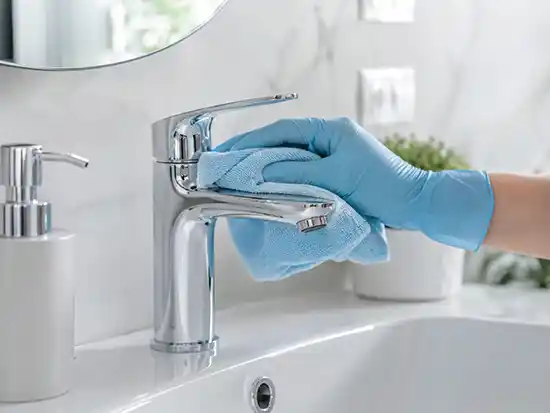
Never ask a cleaner to mix chemicals. Bleach should not be mixed with vinegar, limescale remover, ammonia-based products or other household cleaners. Products should be used according to the label, with correct dilution, ventilation, suitable gloves where required, and enough dwell or contact time where disinfection is intended.
For everyday home cleaning, surface compatibility matters. Acidic descalers can damage natural stone. Abrasive pads can scratch glossy taps, shower screens, enamel and coated surfaces. Too much water can harm wood, laminate edges and some furniture.
Good professional habits to look for
- Separate cloths for kitchens, bathrooms and toilets.
- Cleaning from higher areas down to lower areas.
- Removing grit before mopping to reduce abrasion.
- Patch testing unfamiliar products on discreet areas.
- Leaving floors dry or clearly warning if they are still damp.
Common Mistakes When Hiring a Cleaner
Choosing on price alone is the most common mistake. A very cheap clean may be rushed, under-scoped or unclear about extras.
Failing to tidy first also reduces value. Cleaners can work faster when floors, worktops and bathroom ledges are reasonably clear.
Not discussing products can create problems for allergies, pets, babies, fragrance sensitivity and delicate materials.
Expecting deep-clean results from a maintenance clean leads to disappointment. Regular cleaning keeps a home under control; deep cleaning tackles build-up.
Leaving access unclear can waste booked time. Confirm keys, parking, alarms, pets and any rooms that should not be entered.
Conclusion
Knowing how to find a good cleaner comes down to clarity, trust and fit. Define the job, compare real feedback, ask sensible questions and agree a checklist before work begins.
The right cleaner will understand your priorities, use suitable methods for your home and communicate clearly when a task needs more time or specialist treatment. That is how cleaning becomes a reliable support, not another source of stress.
Q&A
How do I know if a cleaner is reliable?
Look for recent reviews, clear communication, punctual replies, transparent pricing and a willingness to agree a written task list before the first clean.
Should I book a trial clean first?
Yes. A trial clean helps you check quality, communication, timing and fit before committing to weekly or fortnightly cleaning.
What should I ask a cleaner before hiring them?
Ask what is included, what costs extra, whether they bring products, how they handle access, whether they have insurance and how they protect delicate surfaces.
How long should I book a cleaner for?
A small flat may need two hours for routine upkeep, while a family home, pets, extra bathrooms or heavy build-up may need three to four hours or more.
Is a deep clean necessary before regular cleaning?
Not always. If the home is already in reasonable condition, regular cleaning can start straight away. If there is heavy grime, limescale or dust build-up, a deep clean first is usually more effective.
Should I provide cleaning products?
That depends on the cleaner. Agree it before booking and mention allergies, pets, preferred fragrance levels and surfaces that need pH-neutral or specialist care.
Further Reading
Ready to Find a Cleaner?
Search by postcode on Scrub Bunnies, compare local cleaners, read reviews and message cleaners directly to agree the service, schedule and checklist that suits your home.
Before You Book a Local Cleaner Checklist
Download the Scrub Bunnies Before You Book a Local Cleaner worksheet to compare cleaners with confidence. It gives customers a simple way to record answers on pricing, access, insurance, products, and what is included before making a booking decision.
Share Post
0 Comments